Talk2CAD › Tile and slab layers
Talk2CAD for Tiling
A 2.5 mm spacer cross? Does not exist. It does now – generated in 50 seconds, printed in 15 minutes.
Large format on the wall, the core bit wanders across the glaze, and your joint width falls between two bag sizes. The aids on the market only know standard sizes. Your site does not.
Six parts you cannot buy like that.
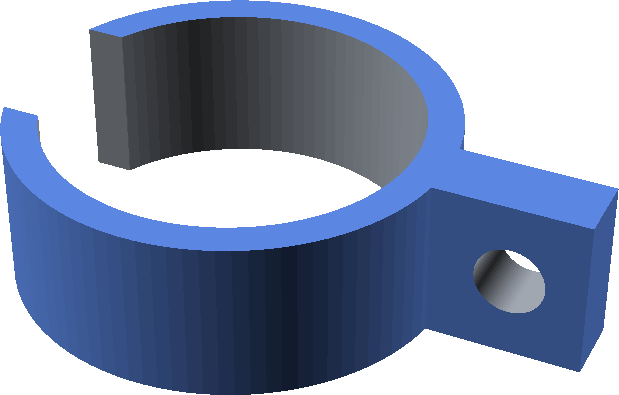
Guide ring in your core diameter, suction or adhesive surface next to it – so the first cut sits right.
2.5 mm, 3.5 mm, whatever you need. Set it once, print as many as the area demands.
The same joint across the whole wall, even when the screed moves.
Transfer position and diameter instead of measuring twice.
Clamps onto the rail of the tile cutter and holds the dimension across the whole row.
A trifle, costs nothing, keeps the case intact.
Free as an STL. Dimensions adjustable right on the model – no account.
What a printed part can do – and what it cannot.
Nothing that permanently carries load or stays built in: no spacers under foot traffic, nothing that disappears into the adhesive under the tile and is supposed to hold there. Tools, templates and laying aids that come out again are the case.
PETG. It barely takes up water, tolerates cement slurry and stays dimensionally stable in a hot van – PLA does not.
Not for one, but for two hundred it is. A cross takes seconds of print time and fractions of a cent in material. The point is the size that the trade does not sell.
You measure at the tile and type in the number. The model catches impossible combinations itself – a hole bigger than the part cannot even be set.
For the instant effect, yes. But you can also hand the file to a print service – it is an ordinary STL file.
Describe your part. 50 generations on the house – and you see up front what comes after that.
Also for your trade: